
Classic Ford January 1998
Fiesta XR2 Buyers Guide


Classic Ford January 1998 - Page 52 - Fiesta XR2 Buyers Guide
Fiesta XR2 Buyers Guide
Original article text below
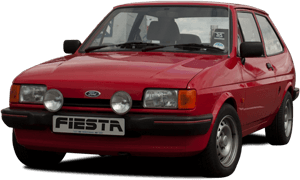
Sporty, solid and chunky, the Fiesta XR2 can be a cheap and reliable runaround. Just avoid the thrashed and rusty examples.
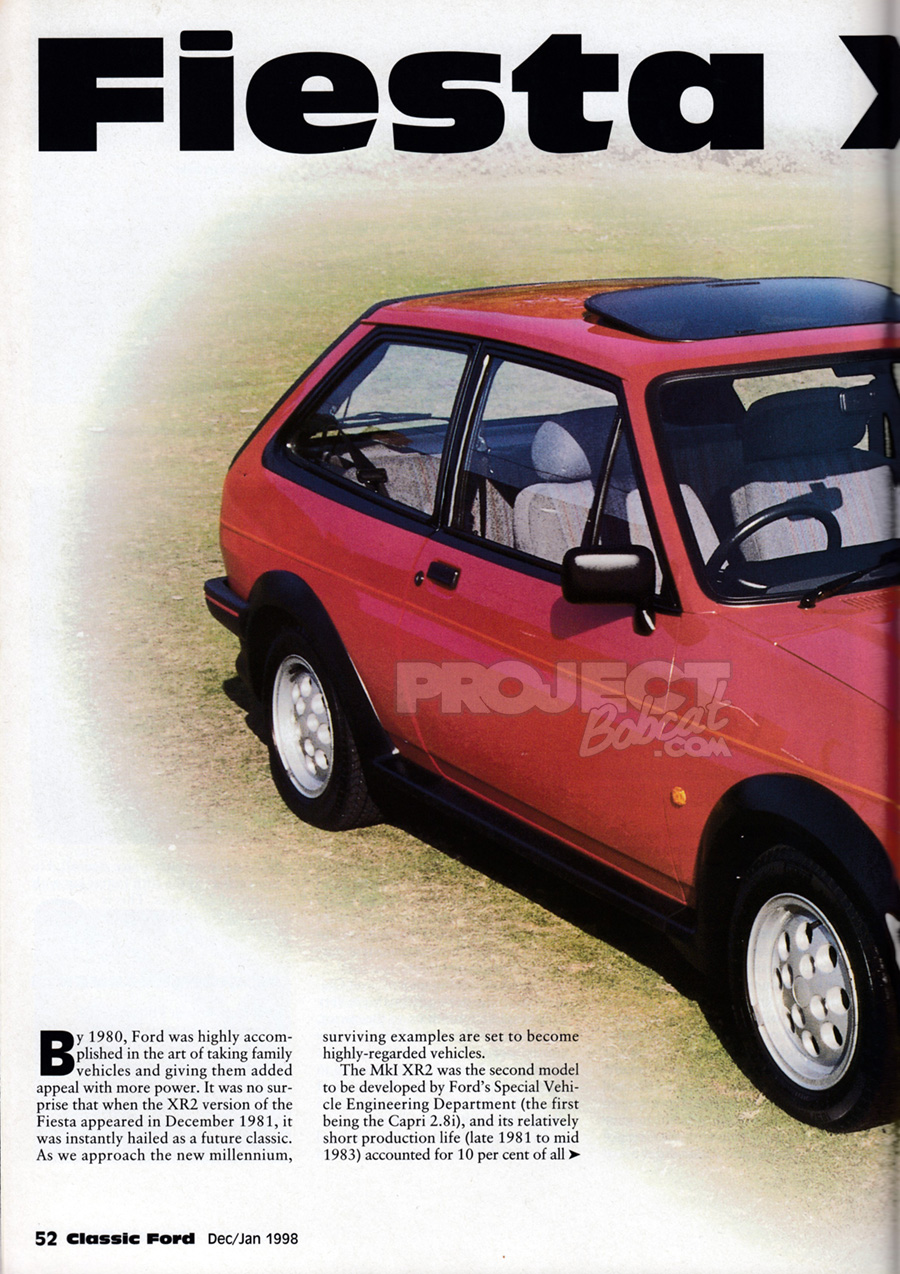
By 1980, Ford was highly accomplished in the art of taking family vehicles and giving them added appeal with more power. It was no surprise that when the XR2 version of the Fiesta appeared in December 1981, it was instantly hailed as a future classic. As we approach the new millennium, surviving examples are set to become highly-regarded vehicles.
The MkI XR2 was the second model to be developed by Ford’s Special Vehicle Engineering Department (the first being the Capri 2.8i), and its relatively short production life (late 1981 to mid 1983) accounted for 10 per cent of all Fiesta sales. The XR2 was the only model still running a Kent overhead-valve engine, albeit uprated and equipped with electronic ignition.
After a short breakm Ford introduced the MKII in the summer of 1984. The XR2 was much cheaper than some rivals, such as the Peugeot 205 GTi. During the winter of 1984, an XR2 cost just under £6000, whereas the Peugeot was over £6600.
The new XR2 was powered by the overhead-camshaft CVH engine—still carburettor-fed, as in the Escort XR3, and mated to the Escort 1.6 transmission. The suspension was improved and front brake size increased, but the essential XR2 characted was unchanged. Ultimately, the MkII is a little faster in both acceleration and top speed. Both are economical considering their performance, and 35mpg is realistic.
Body
XR2s can rust terribly, especially earlier models. Don’t buy a rotbox unless you’re looking for a project — the cost of restoration will exceed the car’s value. Sound cars can still be found, and prices are reasonable, so it’s better to spend time and energy (and perhaps a little more cash) on a good one.
Check for ‘disguised’ rust as well as obvious damage. Also, be aware that corrosion may be hidden by numerous trim mouldings. It is important that the sill structures, inner front wings/suspension mountings and the rear of the underbody are sound, and a thorough inspection of these areas will give a good indication as to how bad the rest of the structure is.
Examine the outer and inner sills, as well as the floorpans, from all angles — from below, from the sides and from inside the vehicle. Bear in mind that if the inner sills are seriously rusted (which can often be the case even if the outers look sound), the seat belt mountings will be affected too. In this case, the car is actually dangerous to drive.
With the bonnet open, inspect around and behind the suspension tower tops. It is not uncommon for the inner wings and adjacent steel to be holed. Confirm their condition with a detailed look from under each wheelarch, using a powerful lamp. Check the bases of the door pillars from under each wing and from inside the car.
Inspect the boot floor from above and below, and check the metalwork around all the suspension mountings, the axle beam, and the coil spring seats — all are prime candidates for serious corrosion. Other parts of the body at risk of disintegration include the extremities of the wings, the rear wheelarch lips, the windscreen framework, the doors (especially along the lower edges), and also the quarterlight frames. The leading edge of the bonnet is often wafer-thin, as is the lower section of the tailgate.
Engine
Kent engines often rattle after high mileages, usually due to valve gear wear. They can also smoke and fume badly, which can be an indication of possible piston/ring/cylinder bore wear. Broken cam followers are not entirely unknown either.
Multi-aperture sports alloy wheels were optional on the MkIIs. Deep wheelarch trims and body mouldings were standard throughout the range, contributing to the sporty image.
The CVH units in the MkIIs can suffer from worn valve stem oil seals, resulting in smoke. Sticky valve lifters rattle, especially if oil and filter changes have been neglected in the past. Engine mounts break too, taking with them the exhaust system.
Another mechanical problem to watch for is failure of the differential side bearings (after 40,000 miles or less). This means transmission casing damage. Warning signs include leaks from one or more of the driveshaft oil seals, and a speedometer that doesn’t work properly. Worn rear radius arm bearings are another common failing, and can result in MoT failure.
h3>Drivetrain And Running GearIt is a shame, but many XR2s have been consistently caned by their owners.
Another problem is that the cars have always been a popular target for car crime, in particular so-called ‘joyriding’. If the car has survived either of these indignities, it can often be in a poor mechanical state. If you buy a car that isn’t already equipped with comprehensive security equipment, fit a decent immobiliser/alarm and be careful where you leave the car unattended.
When viewing the vehicle, try to ensure that the vendor is the rightful owner and that the car is genuine. Ensure that all numbers match between the vehicle and the V5 registration document, and that the seller’s name tallies. If you have any doubts, it’s best to walk away and inform the police. Long-term ownership is a good sign, as is a properly kept service record.
Have a good look at the interior and ensure that it is in good condition, as this can be quite difficult to replace.
Prices
There is no need to spend a fortune to find a good XR2. Sound examples (albeit requiring ‘cosmetics’) are often advertised between £500 and £1000, and you should be able to buy a really nice example for around £1500. Dealers can charge up to £3000 for a late model, low-mileage corker of an XR2, but at this level it shouldn’t require any significant work or maintenance for some time.
Maintenance
Despite its high performance potential, the XR2 is essentially a straightforward vehicle of simple design. There is reasonable underbonnet room, and in general the cars are easy to work on.
One aspect which discourages routine inspection is that the rear hub/brake drum assembly has to be disturbed in order to gain access to the rear brakes. We appreciate that small inspection apertures are provided in the backplates, but nevertheless recommend that the drums are removed regularly for a full inspection of the cylinders, shoes and self-adjust mechanism.
Service intervals are 6000 miles, and components required are readily available. On the CVH-engined cars, it is essential that the timing belt is replaced without fail every 36,000 miles, if belt breakage and an expensive coming-together of valves and pistons is to be avoided. Fortunately, this is an easy job for DIY enthusiasts, taking around an hour from start to finish. New belts are available for around £15 or less.
One of the vehicles featured in this article is listed in our register of known cars
See more details